'Yechon Samgangnaru Jumak' Designated as National Intangible Cultural Heritage
...
( 전북교육신문 제휴 ) (2025-11-27 10:44:15)
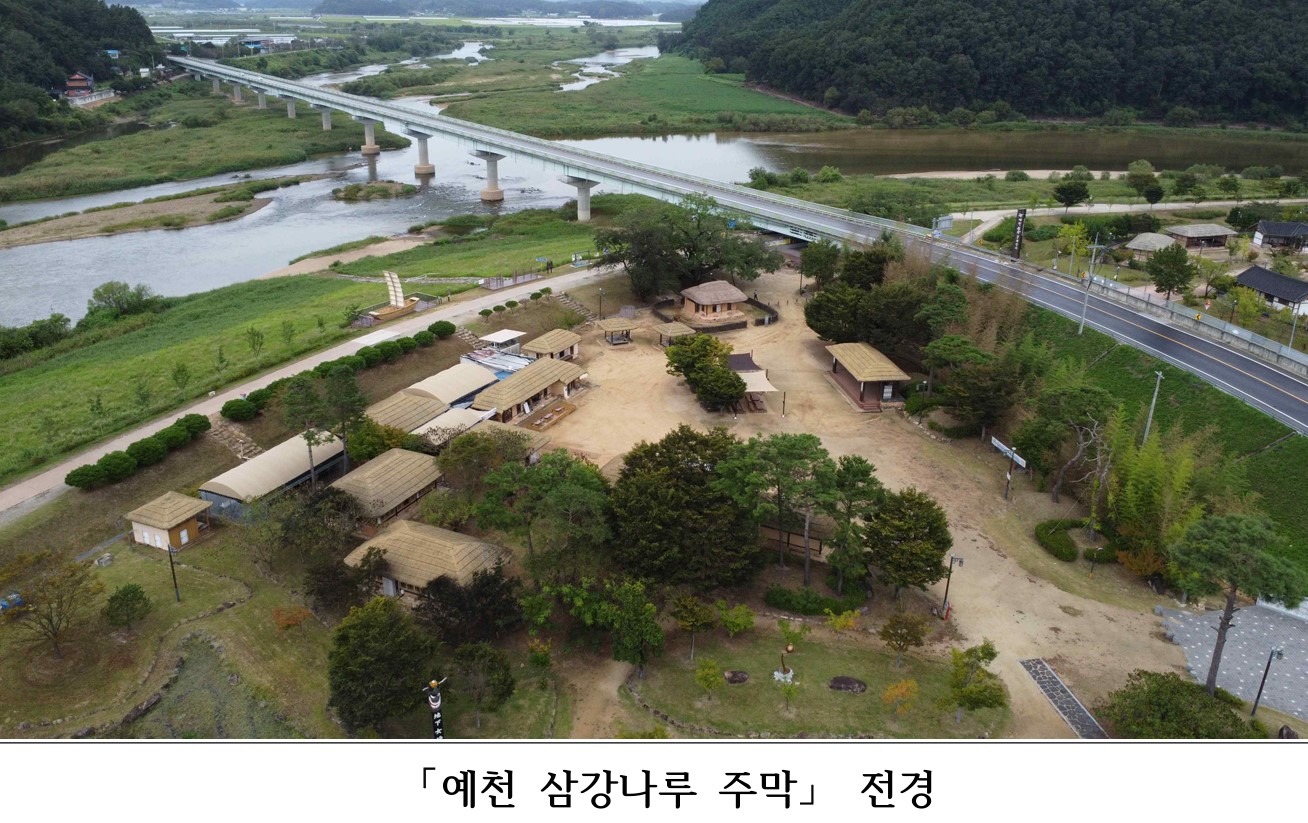
국가유산청(청장 허민)은 경상북도 예천군 풍양면에 있는 ‘예천 삼강나루 주막’을 국가민속문화유산으로 지정하였다.
‘예천 삼강나루 주막’은 낙동강(洛東江), 금천(錦川), 내성천(乃城川)이 합수되는 곳에 위치한 나루터를 배경으로 1900년경부터 2005년까지 100년 이상 주막으로 운영되어 온 역사적 가치를 지니고 있다.
갑술년(1934년) 대홍수에도 소실되지 않고 큰 변형 없이 원형을 간직하고 있는 정면 2칸, 측면 2칸 규모의 초가집이다. 주막의 주인이 거처하는 주모방과 접객을 위한 독립된 방이 각 1칸씩이고, 뒤쪽으로 부엌 1칸과 마루 1칸을 둔 田자형 평면으로, 연결동선을 최소화하여 접객의 기능에 충실한 집약적인 공간구성을 이룬다. 또한, 아궁이가 부엌 내 부뚜막에서 각 방으로 따로 연결된 형태의 독립된 구들난방 형식을 갖고 있다.
주모방에서 출입가능한 부엌 위쪽 다락에는 홍수나 화재의 화를 면하고 주막의 무탈을 기원하는 성주단지(집의 건물을 수호하는 가신(家神)을 모신 단지)가 있어 가신신앙의 모습을 보여준다. 부엌 내부 흙벽에는 외상 처리 표시를 위해 그은 작대기선 원형이 잘 남아있는데, 이는 주막 유산으로서의 면모를 보여주는 매우 희소성 있는 자료이다.
나루에서 연결되는 마을의 입구에 위치한 주막과 함께, 제방에는 동제가 치러지는 동신목과 남근석이 있어 주막의 역사문화경관을 구성하고 있다. 이와 함께, 지난 130년간 이어져 온 동제의 역사를 기록한 『동신계책(洞神契冊)』 문서를 통해 민속유산으로서의 지속성과 연속성도 확인된다. 특히, 동제 때 삼강나루를 위한 ‘강신(江神)’과 삼강주막을 위한 ‘주막수호신’에게 소지(燒紙)를 올린 것으로 확인되며, 마을에서 ‘삼강도선계(三江渡船契)’를 결성해 운영한 문서도 보존되어 있는 등 나루와 주막의 역사와 민속을 총체적으로 이해할 수 있다는 점에서도 높은 가치를 지녔다.
The Cultural Heritage Administration (Director Heo Min) has designated the 'Yecheon Samgang Naru Jumak' in Pungyang-myeon, Yecheon-gun, Gyeongsangbuk-do as a national intangible cultural heritage.
The 'Yecheon Samgang Naru Jumak' has a historical value as it has been operated as a jumak (traditional Korean tavern) for over 100 years from around 1900 to 2005, against the backdrop of a narutte where the Nakdong River, Geumcheon, and Naeseongcheon converge.
Despite the great flood in 1934, it has retained its original form without significant alterations, with a front structure of 2 rooms and 2 side rooms. The main room where the jumak owner resides and a separate room for guests are each one room, with a kitchen and a porch at the back in a rectangular layout, minimizing connecting lines to create a concentrated spatial configuration that is faithful to the function of receiving guests. Additionally, it features a unique heating system with a kitchen hearth connected to each room separately.
In the attic above the kitchen accessible from the main room, there is a seongjudanji (altar to protect the house, housing the household god) to ward off floods or fires and pray for the safety of the jumak, displaying the belief in household gods. The circular lines drawn on the mud walls inside the kitchen to indicate external processing are well preserved, serving as a very rare material that showcases the aspect of the jumak heritage.
Together with the jumak located at the entrance of the village connected to the narutte, the embankment includes a dongshinmok (sacred tree for village deity) and namgeunseok (stone for village deity ceremonies), forming the historical and cultural landscape of the jumak. Furthermore, the continuity and sustainability as an intangible cultural heritage are confirmed through the document 'Dongshin Gyesaek' recording the history of the dongje (village deity ceremony) that has been carried out for the past 130 years. Especially, it is confirmed that offerings (burned paper) were made to 'Gangshin' for the Samgang Naru and 'Jumak Suhosin' for the Samgang Jumak during the dongje, and documents such as the 'Samgang Dosun Gye' formed and operated by the village are preserved, allowing for a comprehensive understanding of the history and folklore of the narutte and jumak.