【전북장애인뉴스】장애아를 키우는 가정의 하루는 늘 긴장의 연속이다. 치료와 교육, 건강관리부터 일상적인 신변 지원까지 부모의 손길이 닿지 않는 곳이 없다. 장기간 이어지는 돌봄에 심리적·신체적 피로가 누적되고, 다른 자녀 양육이나 직장생활을 병행하는 데 어려움을 겪는 가정도 적지 않다.
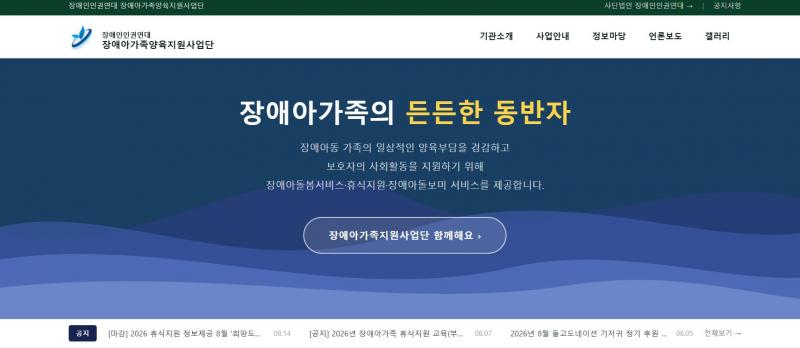
이러한 양육 부담을 덜고 가족 구성원 모두가 안정적인 일상을 되찾을 수 있도록 돕는 ‘장애아가족양육지원사업’이 주목받고 있다. 전북 장애아가족양육지원사업단은 전문 돌봄서비스와 휴식지원 프로그램을 통해 장애아 가정의 삶의 질을 실질적으로 높여주고 있다.
▲전문 돌보미가 집으로… 부모에겐 ‘휴식’ 아동에겐 ‘성장’
사업의 핵심은 단연 ‘장애아 돌봄서비스’다. 전문 자격을 갖춘 돌보미가 가정에 직접 방문해 아동을 안전하게 돌본다. 부모는 돌봄서비스가 제공되는 시간 동안 병원 진료, 직장 업무, 개인 볼일 등을 처리하거나 휴식을 취할 수 있다.
장애아 부모에게 ‘잠시 쉴 수 있는 시간’은 단순한 휴식을 넘어 삶을 유지하는 에너지원이 된다. 돌봄을 홀로 감당해야 한다는 압박감에서 벗어나면서, 가족 구성원 간의 관계도 한층 건강해지는 선순환이 일어난다. 부모뿐만 아니라 아동 역시 안정적인 환경에서 맞춤형 돌봄을 받으며 건강한 발달을 도모할 수 있다.
문화·여가·교육 활동을 함께하는 ‘휴식지원 프로그램’도 큰 호응을 얻고 있다. 돌봄에 지친 가족들이 함께 재충전하며 서로를 이해하는 계기를 마련하고, 사회적 관계나 경제활동에서 위축되지 않도록 돕는다.
▲연 1,200시간 지원… 소득 기준 따라 본인부담 차등
장애아가족양육지원사업의 주요 지원 내용과 이용 기준은 다음과 같다.
△맞춤형 돌봄: 학습 및 놀이 지원, 일상생활 신변보호, 병원·외부활동 등 외출·이동 동행 △병행 이용: 청소년 발달장애학생 방과후활동서비스와 중복 이용 가능 △우선 지원: 만 6세 미만 중증 장애아동 우선 지원 △이용 지원시간: 아동 1인당 연 1,200시간 범위 내(월 100시간 기준, 돌봄공백 등 필요시 사유서 제출을 통해 월 최대 160시간까지 가능)
▲신청 자격 및 서비스 대상
△대상 아동: 만 18세 미만의 「장애인복지법」상 등록된 장애 정도가 심한 장애아동 △가구 기준: 장애아동과 생계 및 주거를 같이하는 가정 △제외 대상: 장애 정도가 심하지 않은 아동 및 미등록 아동은 여성가족부 아이돌봄서비스 이용 대상
▲이용 요금 안내
△기준 중위소득 120% 이하 가정: 무료 (연 1,200시간 이내) △기준 중위소득 120% 초과 가정: 시간당 5,120원 (본인부담률 40%)
▲“혼자 감당하지 마세요”… 신청 및 문의
장애아를 키우는 일은 한 가정만의 몫이 아닌, 지역사회와 국가가 함께 나누어야 할 책무다. 하지만 제도를 잘 몰라 혜택을 놓치는 안타까운 경우도 발생하는 만큼, 사업단의 지속적인 안내와 홍보가 더욱 중요해지고 있다.
상세한 서비스 내용과 신청 절차, 이용료 등은 지역 및 운영 기준에 따라 차이가 있을 수 있다. 지원이 필요한 가정은 주저하지 말고 장애아가족양육지원사업단(063-901-1131)이나 주소지 관할 시·군·구(읍·면·동) 행정복지센터로 신청하면 된다.
[Special Report] "Sharing Care and Adding Happiness"
A day in the life of a family raising a child with disabilities is always full of tension. From therapy and education to healthcare and daily personal support, there is no area where the parents' touch does not reach. The long-term care accumulates psychological and physical fatigue, and many families struggle to balance caring for their disabled child with raising other children or maintaining a career.
To alleviate this caregiving burden and help all family members regain a stable daily life, the 'Support Program for Families with Disabled Children' is gaining attention. The Jeonbuk Support Program for Families with Disabled Children is significantly improving the quality of life for families with disabled children through specialized care services and respite support programs.
▲ Professional caregivers come to the home... Providing 'rest' for parents and 'growth' for children
The core of the program is undoubtedly the 'care services for disabled children.' Caregivers with professional qualifications visit the homes directly to safely care for the children. During the time care services are provided, parents can handle hospital appointments, work tasks, personal matters, or simply take a break.
For parents of disabled children, the 'time to rest' is more than just a break; it becomes a source of energy to sustain life. By relieving the pressure of handling care alone, relationships among family members improve significantly. Not only parents but also children can receive tailored care in a stable environment, promoting healthy development.
The 'respite support program,' which includes cultural, leisure, and educational activities, is also receiving great responses. Exhausted families can recharge together, fostering understanding among each other and preventing social and economic activities from deteriorating.
▲ 1,200 hours of support per year... Self-payment varies according to income criteria
The main support contents and usage criteria of the Support Program for Families with Disabled Children are as follows:
△ Tailored care: Support for learning and play, daily life personal care, accompanying outings and movements for hospital or external activities
△ Concurrent use: Can be used concurrently with after-school services for adolescents with developmental disabilities
△ Priority support: Priority support for severely disabled children under 6 years old
△ Usage hours: Within a range of 1,200 hours per child per year (based on 100 hours per month, up to a maximum of 160 hours per month through submission of reasons for care gaps if needed)
▲ Eligibility and service targets
△ Target children: Severely disabled children under 18 years old registered under the "Disability Welfare Act"
△ Household criteria: Families living with disabled children and sharing livelihood and housing
△ Excluded targets: Children with less severe disabilities or unregistered children are eligible for the Ministry of Gender Equality and Family's childcare services
▲ Fee information
△ Families with incomes below 120% of the median income: Free (within 1,200 hours per year)
△ Families with incomes exceeding 120% of the median income: 5,120 won per hour (self-payment rate of 40%)
▲ "Don't handle it alone"... Application and inquiries
Raising a child with disabilities is not solely the responsibility of one family but a duty that should be shared by the local community and the nation. However, as unfortunate cases of missing out on benefits due to a lack of understanding of the system occur, continuous guidance and promotion by the program are becoming increasingly important.
Detailed service information, application procedures, fees, etc., may vary depending on the region and operational standards. Families in need of support should not hesitate to apply through the Support Program for Families with Disabled Children (063-901-1131) or the local administrative welfare center in their jurisdiction.
📝 Summary:
Raising a child with disabilities can be overwhelming, leading to both physical and emotional exhaustion for families. To support these families, the 'Support Program for Families with Disabled Children' offers specialized care services and respite support programs. This program aims to improve the quality of life for families by providing professional caregivers, tailored care services, and cultural activities.
🗣️ Korean Translation:
장애를 가진 아이를 키우는 가족들은 항상 긴장하고 있는 삶을 살아가고 있습니다. 이들을 지원하기 위해 '장애 아동 가족 지원 프로그램'은 전문 간병인, 맞춤형 간병 서비스, 문화 활동 등을 제공하여 가족들의 삶의 질을 향상시키고자 합니다.
❓ Comprehension Questions:
1. What are some of the challenges faced by families raising a child with disabilities?
가족들이 장애를 가진 아이를 키우면서 직면하는 어려움은 무엇인가요?
2. How does the 'Support Program for Families with Disabled Children' aim to help these families?
'장애 아동 가족 지원 프로그램'은 어떻게 이러한 가족들을 돕기 위해 노력하고 있나요?
3. What are some of the eligibility criteria and support contents of the program mentioned in the article?
기사에서 소개된 프로그램의 자격 요건과 지원 내용은 어떤 것이 있나요?
💡 Vocabulary Learning:
1. respite (휴식, 휴식 시간) - noun
- a short period of rest or relief from something difficult or unpleasant
- 짧은 휴식 또는 어려운 일로부터의 안도를 위한 시간
- After a long day of work, she finally found some respite in her favorite book.
- 긴 하루 일한 후, 그녀는 드디어 자신이 좋아하는 책에서 휴식을 얻었다.
2. alleviate (완화하다, 경감하다) - verb
- make (suffering, deficiency, or a problem) less severe
- (고통, 결핍 또는 문제를) 덜 심하게 만들다
- The medication helped alleviate the patient's pain.
- 그 약은 환자의 통증을 완화하는 데 도움이 되었다.
3. stable (안정된) - adjective
- not likely to change or fail; firmly established
- 변화하기 어렵거나 실패할 가능성이 없는; 확고히 성립된
- The company aims to provide a stable environment for its employees.
- 그 회사는 직원들에게 안정된 환경을 제공하려고 노력하고 있다.
4. respite support program (휴식 지원 프로그램) - noun phrase
- a program that offers support and relief to families caring for disabled children
- 장애 아동을 돌보는 가족에게 지원과 안도를 제공하는 프로그램
- The respite support program includes various activities to help families relax.
- 휴식 지원 프로그램에는 가족들이 편안해질 수 있도록 다양한 활동이 포함되어 있다.
5. eligibility (자격, 적격) - noun
- the state of having the right to do or obtain something
- 어떤 것을 할 권리 또는 얻을 권리가 있는 상태
- She met all the eligibility criteria to apply for the scholarship.
- 그녀는 장학금 신청 자격 조건을 모두 충족했다.

💬 댓글 (0)
댓글을 작성하려면 로그인이 필요합니다.
로그인첫 댓글을 작성해보세요!