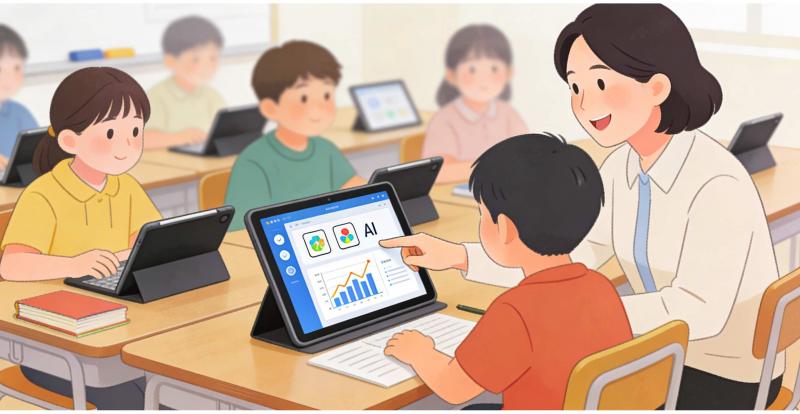
【전북장애인뉴스】교육부(장관 최교진)가 새 학기를 맞아 발달장애 학생의 학습 방식과 감각적 특성을 반영한 ‘특수교육 인공지능(AI)·디지털 교육자료’를 개발해 전국 특수학교 현장에 보급했다. 이번 자료는 단순히 디지털 기기를 활용하는 수준을 넘어, 학습의 장벽을 낮추고 개별 학생 맞춤형 교육을 구현하는 데 초점을 맞췄다.
이번에 처음으로 보급된 교육자료는 지적장애와 자폐성장애 학생 등 약 7만 5천여 명을 대상으로 한다. 지적장애 학생을 위해서는 실생활 중심의 구체적인 내용을 반복 학습할 수 있도록 하고, AI가 수행 수준을 분석해 학습 단계를 세분화함으로써 성취감을 높일 수 있도록 설계됐다.
자폐성장애 학생을 위해서는 시각적 단서(Visual Support)를 풍부하게 제공하며, 화면 구성을 단순화하고 소리 크기 등을 조절할 수 있도록 했다. 또한 발화가 어려운 학생을 위해 대체 의사소통 기능을 지원하는 학습 보조도구도 포함됐다.
교육자료는 초등학교 수학(3~4학년)과 국어(5~6학년) 교육과정에 맞춰 개발됐다. 학습자가 글자를 읽지 못하더라도 그림 아이콘만으로 학습에 참여할 수 있는 앱 형태로 제작된 것이 특징이다. 교사용 플랫폼은 국립특수교육원의 ‘열린배움터’(https://aiclass.nise.go.kr)를 통해 제공되며, AI가 학생의 학습 과정을 분석해 교사가 개별 속도에 맞춘 지도를 할 수 있도록 돕는다.
2025년 시범학교 운영 결과에서는, 말로 의사소통이 어려운 학생이 앱을 통해 자신의 학습 선호를 표현하기 시작하는 등 긍정적인 변화가 나타났다. 시범학교 교사들은 학생들의 집중력과 학습 참여도가 높아졌다고 평가했다.
교육부는 2028년까지 AI 기반 특수교육 자료를 모든 학년으로 확대할 계획이다. 또한 국립특수교육원을 중심으로 교사 연수를 강화해, 발달장애 학생의 디지털 학습 특성을 이해하고 지도할 수 있는 역량을 높일 방침이다.
최교진 교육부 장관은 “이번 인공지능 교육자료가 발달장애 학생들에게 세상과 소통하는 새로운 창이 되길 바란다”며 “장애로 인해 배움에서 소외되지 않도록 지원을 확대하겠다”고 말했다. 김선미 국립특수교육원장도 “현장의 의견을 반영한 양질의 교육자료 개발·보급에 최선을 다하겠다”고 밝혔다.
Ministry of Education to Distribute AI and Digital Educational Materials for Students with Developmental Disabilities Nationwide
The Ministry of Education, led by Minister Choi Kyujin, has developed and distributed 'special education artificial intelligence (AI) and digital educational materials' that reflect the learning styles and sensory characteristics of students with developmental disabilities in special schools nationwide to coincide with the new school year. This new material goes beyond simply using digital devices, focusing on lowering learning barriers and implementing individualized education tailored to each student.
The educational materials being distributed for the first time this time target around 75,000 students with intellectual disabilities and autism spectrum disorders. For students with intellectual disabilities, the material is designed to allow them to repetitively learn concrete real-life content and increase a sense of accomplishment by analyzing performance levels using AI to segment learning stages.
For students with autism spectrum disorders, rich visual supports are provided, and the screen layout is simplified with the ability to adjust sound levels. Additionally, learning aids supporting alternative communication functions are included for students who have difficulty speaking.
The educational materials are developed in line with the elementary school curriculum for math (3rd-4th grade) and Korean language (5th-6th grade). They are designed in the form of apps where learners can participate in learning through picture icons even if they cannot read. The teacher platform is provided through the National Institute of Special Education's 'Open Learning Platform' (https://aiclass.nise.go.kr), where AI analyzes students' learning processes to assist teachers in providing individualized guidance according to each student's pace.
Results from pilot schools operating in 2025 showed positive changes, such as students who have difficulty communicating verbally starting to express their learning preferences through the app. Teachers at the pilot schools evaluated that students' concentration and participation in learning had increased.
The Ministry of Education plans to expand AI-based special education materials to all grades by 2028. Furthermore, they aim to strengthen teacher training at the National Institute of Special Education to enhance their capacity to understand and guide the digital learning characteristics of students with developmental disabilities.
Minister Choi Kyujin of the Ministry of Education expressed, "I hope this AI educational material will be a new window for students with developmental disabilities to communicate with the world," and stated, "We will expand support to prevent exclusion from learning due to disabilities." Kim Sunmi, the Director of the National Institute of Special Education, also stated, "We will do our best to develop and distribute high-quality educational materials that reflect the opinions from the field."
📝 Brief Summary:
The Ministry of Education in South Korea has developed special educational materials using artificial intelligence to cater to students with developmental disabilities. These materials are personalized to each student's needs, focusing on lowering learning barriers and providing individualized education.
🗣️ Natural Korean Translation:
한국 교육부는 발달 장애 학생들의 학습 방식과 감각적 특성을 반영한 '특수 교육 인공지능(AI) 및 디지턀 교육 자료'를 개발하고 전국 특수학교에 배포했습니다. 이러한 새로운 자료는 디지털 장치만 사용하는 것을 넘어 학습 장벽을 낮추고 각 학생에게 맞춘 맞춤형 교육에 초점을 맞추고 있습니다.
❓ Comprehension Questions:
1. What is the focus of the new educational materials developed by the Ministry of Education?
새로운 교육 자료의 초점은 무엇입니까?
2. Who are the target students for the special educational materials distributed by the Ministry of Education?
교육부가 배포한 특수 교육 자료의 대상 학생은 누구입니까?
3. How do the educational materials cater to students with autism spectrum disorders?
교육 자료는 자폐 스펙트럼 장애를 가진 학생들을 어떻게 지원합니까?
💡 Vocabulary Learning:
1. artificial intelligence (AI) - 인공지능 (명사)
- Technology that enables machines to learn and perform tasks that typically require human intelligence.
- 기계가 일반적으로 인간 지능이 필요한 작업을 학습하고 수행할 수 있도록 하는 기술입니다.
- Many companies are incorporating artificial intelligence into their products to improve efficiency.
- 많은 기업들이 효율성을 높이기 위해 제품에 인공지능을 통합하고 있습니다.
2. sensory - 감각적인 (형용사)
- Relating to the senses or sensation.
- 감각이나 감각과 관련된 것입니다.
- The new playground equipment provides sensory stimulation for children.
- 새로운 놀이터 장비는 아이들에게 감각적 자극을 제공합니다.
3. individualized - 개인별의 (형용사)
- Customized or tailored for a specific individual.
- 특정 개인에 맞춘 맞춤형 또는 맞춤형입니다.
- The school offers individualized tutoring sessions for students with different learning needs.
- 학교는 다양한 학습 요구를 가진 학생들을 위해 개별 맞춤형 과외 세션을 제공합니다.
4. pilot schools - 시범 학교 (명사)
- Schools selected to test or implement new programs or initiatives.
- 새로운 프로그램이나 계획을 테스트하거나 실행하기 위해 선택된 학교들입니다.
- The pilot schools will be the first to introduce the new curriculum next year.
- 시범 학교들은 내년에 새로운 교육과정을 처음으로 도입할 것입니다.
5. exclusion - 배제 (명사)
- The act of leaving out or preventing someone from participating.
- 누군가를 제외하거나 참여를 방지하는 행위입니다.
- The policy aims to reduce social exclusion among marginalized communities.
- 그 정책은 마이너리티 커뮤니티 사이의 사회적 배제를 줄이기 위해 목표를 두고 있습니다.

💬 댓글 (0)
댓글을 작성하려면 로그인이 필요합니다.
로그인