"Unable to Speak Compensation for Injuries for Fear of Harming the Child..."
...
임창현 기자 (2026-09-10 13:06)
돌봄노동자 얼굴에는 시퍼런 멍이 들어 있었다. 다른 일로 미팅을 하게된 기자가 얼굴에 멍이든 이유를 묻자 그는 조심스럽게 사정을 털어놓았다. 지역아동센터에서 돌보던 지적장애 아동의 돌발행동 과정에서 얼굴을 맞았다는 것이다.
하지만 그는 자신의 피해를 문제 삼지 않았다. 병원 치료비도 직접 부담했다. 사고를 공식적으로 처리하거나 보상을 요구했다가 혹시라도 아동이나 보호자에게 불이익이 돌아갈까 걱정됐기 때문이다. 보상받을 수 있는 제도가 있다는 설명을 들은 뒤에도 반응은 크게 달라지지 않았다. 자신의 치료비보다 아이에게 피해가 가지 않는 것이 더 중요하다는 것이었다.
그런데 불과 얼마 지나지 않아 또 다른 장면을 마주했다. 장애인의 한 시설의 노트북에 데이터 저장서버에 연결 셋팅을 부탁받고 기자가 시설을 방문했는데 장애인시설 시설장의 얼굴에도 여러 곳에 손톱자국으로 보이는 상처와 치료 흔적이 남아 있었다. 이 시설 역시 종사자의 피해 보상 문제를 앞세우기보다 상급기관에 담당 인력을 늘려 달라는 요구를 하고 있는 상황이었다.
두 사례가 우연히 연이어 눈에 들어왔지만, 이를 단순한 우연으로만 볼 수 있을까. 장애인과 장애아동, 정서·행동상의 어려움이 있는 이용자를 돌보는 현장에서는 예측하기 어려운 행동이 발생할 수 있다. 밀치거나 할퀴거나 때리는 행동이 순간적으로 나타날 수도 있다. 이때 가장 경계해야 할 것은 장애인이나 아동을 곧바로 ‘가해자’로 규정하는 것이다. 장애 특성이나 의사소통의 어려움, 불안과 흥분 상태 등 행동이 발생한 배경을 함께 살펴야 하기 때문이다.
그러나 반대편에는 또 다른 문제가 있다. 돌봄노동자가 다치는 것을 ‘업무의 일부’처럼 받아들이는 문화다. 얼굴에 멍이 들고 손톱자국이 남아 병원 치료를 받아야 할 정도인데도, 종사자는 자신의 피해를 말하기보다 이용자에게 피해가 갈 것을 먼저 걱정한다. 기관 책임자조차 자신의 상처보다 인력을 늘려 달라고 요구하는 데 그치는 경우가 있다.
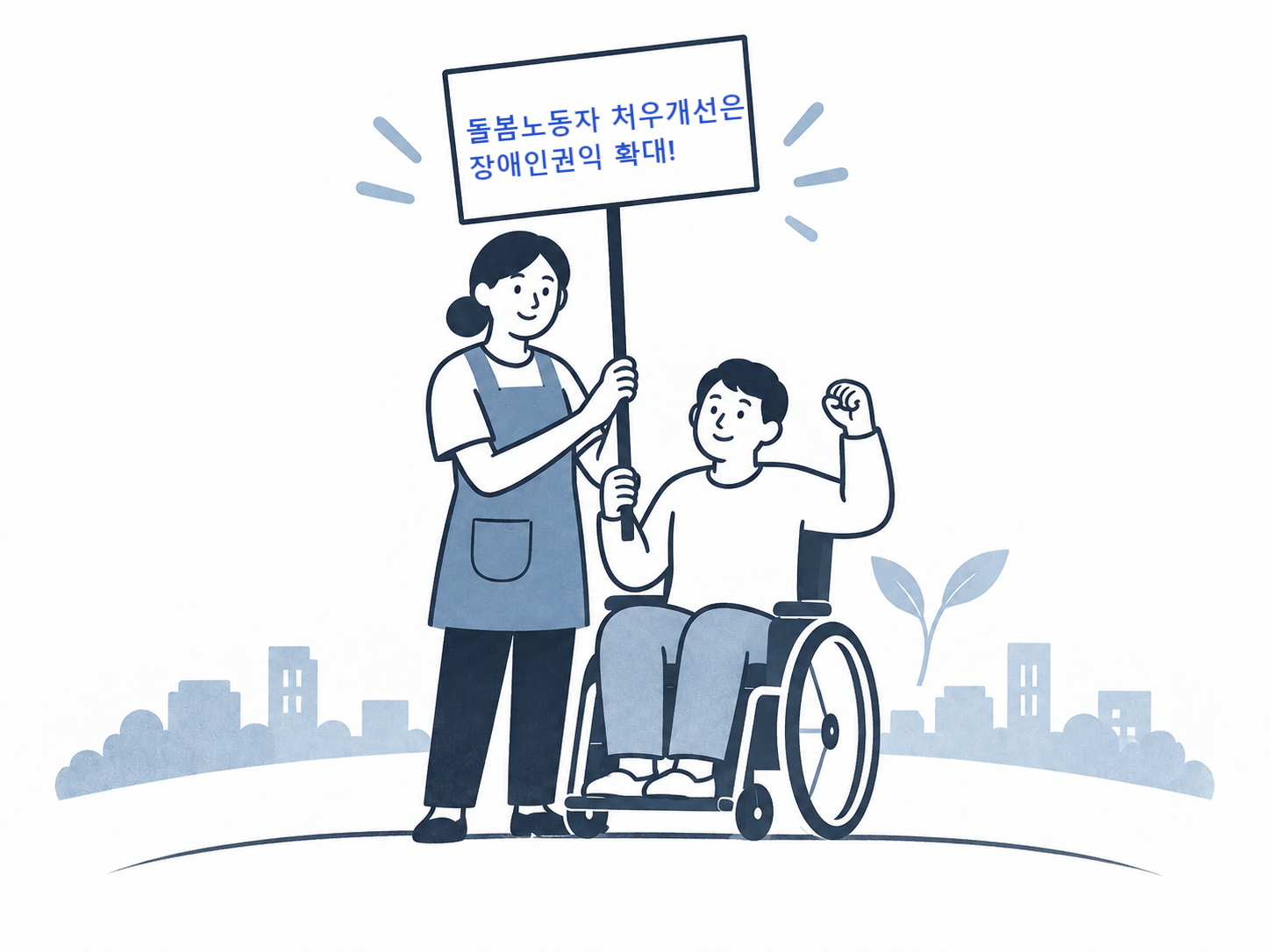
이런 상황을 종사자의 헌신이나 사명감으로만 바라봐서는 안 된다. 돌봄을 받는 사람의 인권과 돌봄을 제공하는 사람의 안전은 서로 충돌하는 가치가 아니다.
종사자가 다쳤을 때 아동이나 장애인, 보호자에게 직접 책임을 묻지 않더라도 치료와 회복을 지원할 수 있는 산재보험과 각종 상해보장 제도가 있다. 문제는 현장에서 이런 제도를 충분히 알지 못하거나, 보상 절차를 밟는 것 자체가 이용자에게 책임을 전가하는 것으로 받아들여질 수 있다는 불안이 존재한다는 점이다.
결국 종사자는 치료비를 자신의 돈으로 부담하고, 시설은 인력 부족을 호소하는 것으로 사고를 마무리하게 된다. 하지만 이런 방식은 근본적인 해결책이 될 수 없다.
사고가 반복된다면 개인의 주의 부족이 아니라 인력 배치와 근무환경, 이용자의 행동 특성을 고려한 지원체계가 적절한지를 살펴야 한다. 한 명의 종사자가 감당해야 하는 이용자 수는 적정한지, 돌발행동이 예상되는 경우 추가 인력을 투입할 수 있는지, 사고 발생 이후 종사자에게 치료와 심리적 회복을 지원하는 체계가 있는지도 점검해야 한다.
특히 보상제도 역시 개선할 필요가 있다. 돌봄 종사자가 치료비를 청구하면서도 “이 돈이 나중에 아이나 보호자에게 청구되는 것은 아닌가”라고 걱정해야 하는 구조라면 실제 제도가 존재하더라도 현장에서는 제대로 작동하기 어렵다.
종사자가 안심하고 치료받을 수 있도록 이용자나 보호자에게 책임을 전가하지 않는 공적 보상체계를 보다 명확하게 안내하고 확대할 필요가 있다.
사고를 숨기는 것이 장애인을 보호하는 방법은 아니다. 멍든 얼굴과 할퀸 상처를 개인이 감내하도록 하는 것 역시 좋은 돌봄이 아니다. 돌봄을 받는 사람을 보호하기 위해서는 그들을 돌보는 사람도 안전해야 한다.
“아이에게 피해가 갈까 봐 치료비를 청구하지 않았다”는 말이 돌봄 현장의 미담으로 남아서는 안 된다. 오히려 그런 말을 하지 않아도 되는 제도를 만드는 것이 우리 사회가 해결해야 할 과제다.
Care workers had bruises on their faces. When a journalist, who had to attend a meeting for another matter, asked about the bruises on their faces, they cautiously explained the situation. They had been hit in the face during a sudden outburst of a child with intellectual disabilities they were caring for at a local child care center.
However, they did not make an issue of their own injury. They even personally bore the cost of hospital treatment. They were worried that demanding formal handling of the incident or compensation might cause harm to the child or their guardian. Even after hearing about the available compensation system, their reaction did not change significantly. They believed that it was more important for the child not to be harmed than for them to receive compensation for their medical expenses.
However, not long after, they encountered another scene. When a journalist visited a facility to set up a data storage server on a laptop for people with disabilities, they noticed several nail marks and treatment marks on the face of the facility manager. In this facility as well, the focus was on requesting an increase in staff from higher authorities rather than emphasizing compensation for the staff's injuries.
Although these two cases seemed coincidental, can they be simply dismissed as such? In the field of caring for individuals with disabilities, emotional and behavioral difficulties can lead to unpredictable behaviors. Pushing, scratching, or hitting behaviors may occur momentarily. At such times, it is crucial not to immediately label individuals with disabilities or children as 'perpetrators'. It is necessary to consider the background of the behavior, such as the characteristics of the disability, communication difficulties, anxiety, and excitement states.
However, on the other hand, there is another issue. There is a culture that accepts the injury of care workers as 'part of the job'. Even when they have bruises on their faces and nail marks to the extent that they need hospital treatment, the staff are more concerned about the harm to the service users than speaking up about their own injuries. In some cases, even the institution's responsible individuals stop at requesting an increase in staff rather than addressing their own injuries.
Such situations should not be viewed solely through the dedication and sense of mission of the staff. The rights of those receiving care and the safety of those providing care are not conflicting values.
Even if the staff do not directly hold the child or person with disabilities and their guardians accountable when they are injured, there are workers' compensation and various injury protection systems that can support their treatment and recovery. The problem lies in the existing anxiety that staff may not be fully aware of these systems on-site, and that following the compensation procedures may be perceived as shifting responsibility to the service users.
Ultimately, the staff end up bearing the cost of treatment with their own money, and the facility concludes the incident by appealing for a shortage of staff. However, this approach cannot be a fundamental solution.
If accidents continue to occur, it is necessary to examine whether the staffing and work environment, as well as support systems considering the behavioral characteristics of the service users, are appropriate. It is essential to check whether the number of service users that one staff member is responsible for is appropriate, whether additional staff can be deployed in cases of sudden behaviors, and whether there is a system in place to support staff with treatment and psychological recovery after an incident.
In particular, there is a need for improvement in the compensation system. If care workers have to worry about whether the money they claim for medical expenses will be later demanded from the child or guardian, even if the system exists, it may not function properly on-site.
It is necessary to clearly guide and expand a public compensation system that does not shift responsibility to service users or guardians, allowing staff to seek treatment without worry.
Hiding accidents is not a way to protect individuals with disabilities. Forcing individuals to endure bruised faces and scratched wounds is not good care either. To protect those receiving care, those providing care must also be safe.
The statement, "I did not claim medical expenses for fear of harming the child," should not remain as a myth of the care scene. Instead, creating a system where such statements are unnecessary is a task that our society must address.