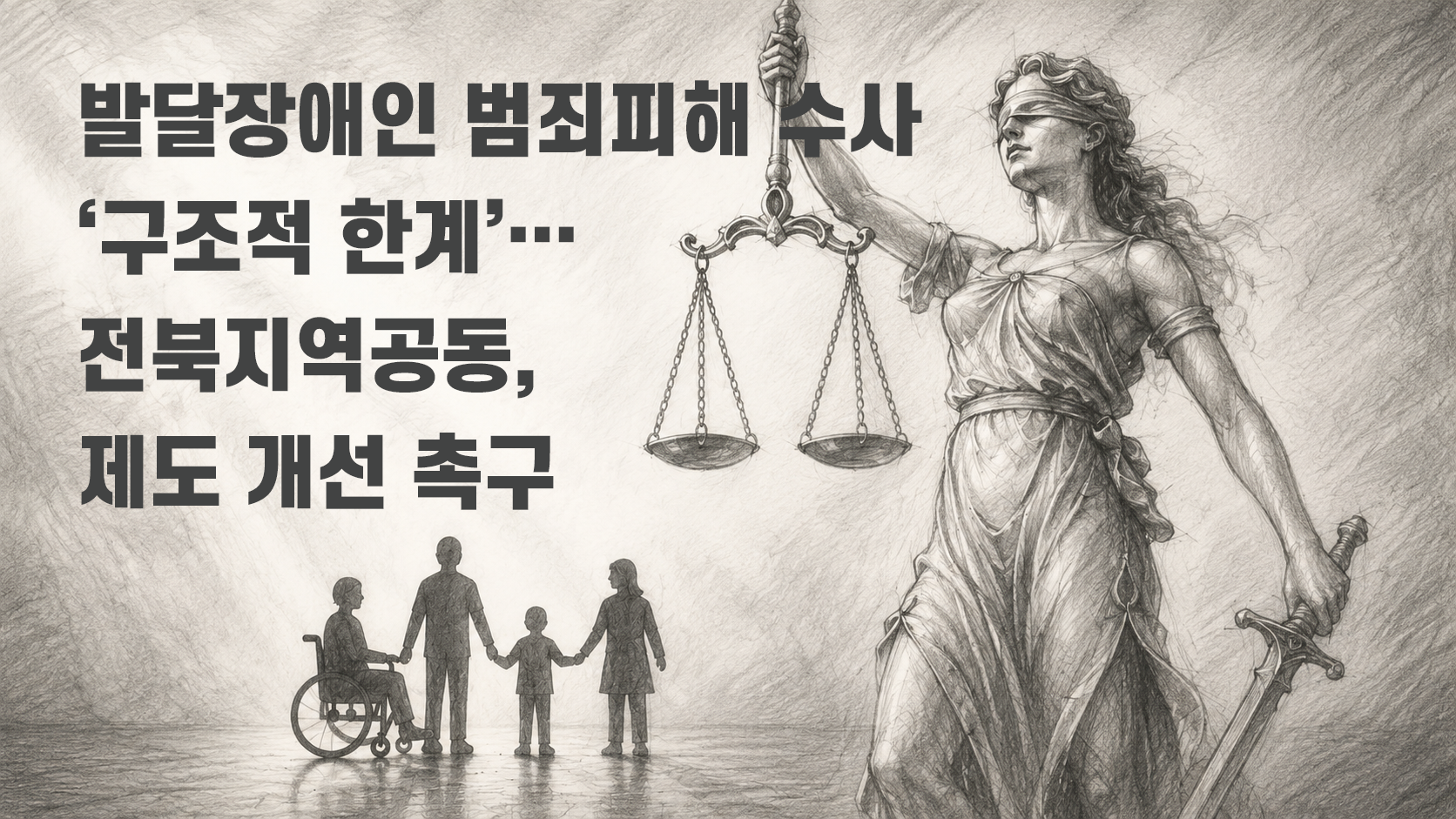
Structural Limitations in Investigating Crimes Against Individuals with Developmental Disabilities... Jeonbuk Region Calls for System Improvements
...
한문숙 기자 (2026-07-26 11:26)
전북지역공동이 발달장애인을 비롯한 사법 취약계층의 범죄피해 사건이 수사와 재판 과정에서 제대로 보호받지 못하고 있다며 수사·교육·행정 전반의 제도 개선을 촉구했다.
전북지역공동은 24일 발표한 입장문을 통해 “발달장애인은 범죄피해를 당하고도 끝까지 피해자로 보호받지 못한 채 수사와 재판 과정에서 다시 배제되는 이중 피해를 겪고 있다”고 밝혔다.
단체는 전북지역 특수학교에서 발생한 장애학생 간 성폭력 사건을 대표적인 사례로 제시했다. 해당 사건은 학교와 교육당국의 잘못된 보고와 부실한 조사로 인해 가해자와 피해자의 위치가 뒤바뀐 상태로 약 2년이 흘렀다는 것이 단체의 주장이다.
또 최근 전북의 한 통합고등학교에서는 자폐성 장애학생이 장기간 괴롭힘과 성폭력 피해를 호소했으나 학교와 교육당국의 조사 지연, 학교폭력 역신고 등으로 피해자 보호가 제대로 이뤄지지 않았다는 우려가 제기되고 있다고 밝혔다.
전북지역공동은 이 같은 사건들이 개별 학교나 시설의 문제가 아니라 발달장애인 범죄피해 사건을 처리하는 수사기관과 교육·행정기관의 구조적 한계를 보여주는 사례라고 지적했다.
단체는 장애인복지법과 형법, 각종 특별법에 장애인 학대 관련 규정이 마련돼 있지만, 관련 규정이 여러 법률에 흩어져 있어 현장에서 통합적인 보호·수사 체계로 작동하지 못하고 있다고 주장했다.
이로 인해 발달장애인 피해자가 학교와 시설, 지방자치단체, 수사기관을 오가며 서로 다른 절차와 기준을 적용받고, 그 과정에서 진술의 신빙성이 의심받거나 피해 사실이 왜곡·축소되는 일이 발생한다는 설명이다.
전담수사관과 진술조력인, 신뢰관계인 동석 제도의 실효성도 문제로 지적됐다.
전북지역공동은 “발달장애 여부를 초기에 확인할 표준화된 절차가 없어 수사관이 장애 특성을 파악하지 못한 채 일반 사건과 동일한 방식으로 조사하는 경우가 있다”며 “발달장애 특성을 고려하지 않은 질문과 진술 평가로 피해자의 진술이 모순되거나 신빙성이 낮다는 이유로 배제될 수 있다”고 밝혔다.
장애인권익옹호기관의 권한에도 한계가 있다고 지적했다. 지역장애인권익옹호기관은 장애인 학대 의심 현장에 출동해 피해자 응급조치와 상담, 사후 지원을 담당하지만 특별사법경찰권이 없어 증거 확보나 가해자에 대한 강제 조치를 직접 수행할 수 없다.
이에 따라 권익옹호기관이 학대 의심 사례를 확인해도 실제 수사 착수는 경찰의 판단과 일정에 좌우되고, 수사가 지연되는 동안 피해자의 기억이 희미해지거나 가해자의 회유·협박 가능성이 커질 수 있다는 것이다.
현행 진술조력인 제도가 주로 범죄피해자를 대상으로 한다는 점도 개선 과제로 제시됐다. 의사소통에 어려움을 겪는 발달장애인이 피의자나 피고인이 된 경우 진술조력 지원에서 배제되고, 경찰 수사 단계에서 국선변호인의 도움을 받기도 어렵다는 지적이다.
전북지역공동은 이러한 문제를 해결하기 위한 네 가지 개선 방안을 제안했다.
우선 전담수사관을 명부상 지정하는 방식에서 벗어나 전문 보직으로 운영하고, 발달장애·인지심리·의사소통 조력 관련 교육을 이수한 인력이 최소 3년 이상 전담 업무를 담당하도록 인사제도를 개편해야 한다고 주장했다.
이어 수사 초기 단계에서 피조사자의 이해 능력과 질문 반응, 언어 사용 등을 확인할 수 있는 표준 식별 체크리스트를 의무적으로 도입해야 한다고 밝혔다. 장애등록 여부와 관계없이 의사소통 장애가 의심되면 진술조력인과 신뢰관계인, 국선변호인 등이 자동으로 연계되는 체계가 필요하다는 것이다.
또 진술조력인 제도의 법적 근거를 형사소송법에 마련하고, 지원 대상을 피해자뿐만 아니라 피의자와 피고인까지 확대해야 한다고 요구했다. 발달장애 피의자에 대해서는 경찰 조사 단계부터 필요적 국선변호인을 지정해 기소 전부터 실질적인 방어권을 보장해야 한다고 덧붙였다.
이와 함께 여러 법률에 흩어진 장애인 학대 관련 규정을 통합한 「장애인학대범죄 처벌 특례법」을 제정해야 한다고 촉구했다.
특례법에는 발달장애인을 대상으로 한 노동력 착취와 경제적 예속, 시설 내 상습 학대, 성폭력 등을 구체적인 범죄 유형으로 규정하고, 가중처벌 기준과 전담 조사체계, 공판준비 절차 등을 명시해야 한다는 입장이다.
전북지역공동은 “발달장애인을 포함한 사법 취약계층에 대한 국가의 사법적 조력은 시혜가 아니라 헌법이 요구하는 최소한의 의무”라며 “발달장애인이 법 앞에서 소외되지 않고 수사와 재판 전 과정에서 동등한 권리를 보장받을 수 있도록 제도를 전면적으로 개선해야 한다”고 밝혔다.
https://www.youtube.com/watch?v=QUIlcQ5opP4
The Jeonbuk Area Joint Advocacy Group called for improvements in the investigation, education, and administrative systems, stating that crime victims among the developmentally disabled and other legally vulnerable groups are not adequately protected during the investigation and trial processes.
In a statement released on the 24th, the Jeonbuk Area Joint Advocacy Group stated, "Even when developmentally disabled individuals are victims of crimes, they are not fully protected as victims throughout the investigation and trial processes, experiencing double victimization by being excluded again."
The group cited a case of sexual assault among disabled students at a special school in the Jeonbuk area as a representative example. According to the group, due to incorrect reporting and inadequate investigation by the school and educational authorities, the positions of the perpetrator and the victim were reversed for about two years in this case.
Moreover, concerns have been raised about the delayed investigation by the school and educational authorities, as well as the lack of proper victim protection, in a recent case where a student with autism at a comprehensive high school in Jeonbuk reported being harassed and sexually assaulted for an extended period.
The Jeonbuk Area Joint Advocacy Group pointed out that these incidents demonstrate structural limitations in the agencies handling crime cases involving developmentally disabled individuals, rather than being isolated issues at individual schools or facilities.
The group argued that although there are regulations related to abuse of disabled individuals in the Disability Welfare Act, the Criminal Act, and various special laws, these regulations are scattered across different laws, hindering the operation of an integrated protection and investigation system on the ground.
As a result, it was explained that developmentally disabled victims are subjected to different procedures and standards as they move between schools, facilities, local governments, and investigative agencies, leading to doubts about the credibility of their statements and distortion or minimization of the facts of the abuse.
The effectiveness of the system involving dedicated investigators, statement facilitators, and trusted individuals was also criticized.
The Jeonbuk Area Joint Advocacy Group proposed four improvement measures to address these issues. Firstly, they suggested moving away from designating dedicated investigators on a roster basis and operating them as specialized positions, with personnel who have received education in developmental disabilities, cognitive psychology, and communication support handling dedicated tasks for at least three years.
They also emphasized the mandatory introduction of a standard identification checklist in the initial stages of the investigation to assess the understanding, response to questions, and language use of the interviewee. They argued that a system automatically linking statement facilitators, trusted individuals, and national defense attorneys should be established when communication disabilities are suspected, regardless of disability registration status.
Furthermore, they demanded that the legal basis for the statement facilitator system be established in the Criminal Procedure Act and expanded to include not only victims but also suspects and defendants. They added that it is essential to appoint necessary national defense attorneys for developmentally disabled suspects from the police investigation stage to ensure substantive defense rights before prosecution.
Additionally, they urged the enactment of the "Special Law on Punishment of Crimes of Abuse against the Disabled" to consolidate scattered regulations related to abuse of disabled individuals in various laws.
The special law should define specific crime types such as exploitation of labor, economic exploitation, repeated abuse within facilities, and sexual violence against developmentally disabled individuals, and specify criteria for aggravated punishment, a dedicated investigation system, and trial preparation procedures.
The Jeonbuk Area Joint Advocacy Group stated, "Legal assistance from the state for judicially vulnerable groups, including developmentally disabled individuals, is not a favor but the minimum obligation required by the constitution," and emphasized the need to comprehensively improve the system to ensure equal rights for developmentally disabled individuals throughout the investigation and trial processes.